About This Content
This article provides educational information about protein sources and their physiological roles. It is not medical advice, personalised recommendations, or treatment guidance. Different individuals have different nutritional needs based on health status, activity level, and personal circumstances.
Understanding Protein
Protein is an essential macronutrient composed of amino acids—organic compounds that serve as building blocks for tissues, enzymes, hormones, and antibodies. The body requires protein for muscle maintenance, repair, immune function, and countless other processes.
There are nine essential amino acids that the human body cannot synthesize, meaning they must come from food. Complete proteins contain all nine; incomplete proteins lack one or more. Protein provides approximately 4 calories per gram.
Animal-Based Protein Sources
Meat and Poultry
Beef, chicken, turkey, pork, and lamb are high-protein foods providing roughly 25-35 grams of protein per 100-gram serving. They also contain important micronutrients including iron, zinc, and B vitamins, particularly B12, which is not naturally found in plant sources.
Fish and Seafood
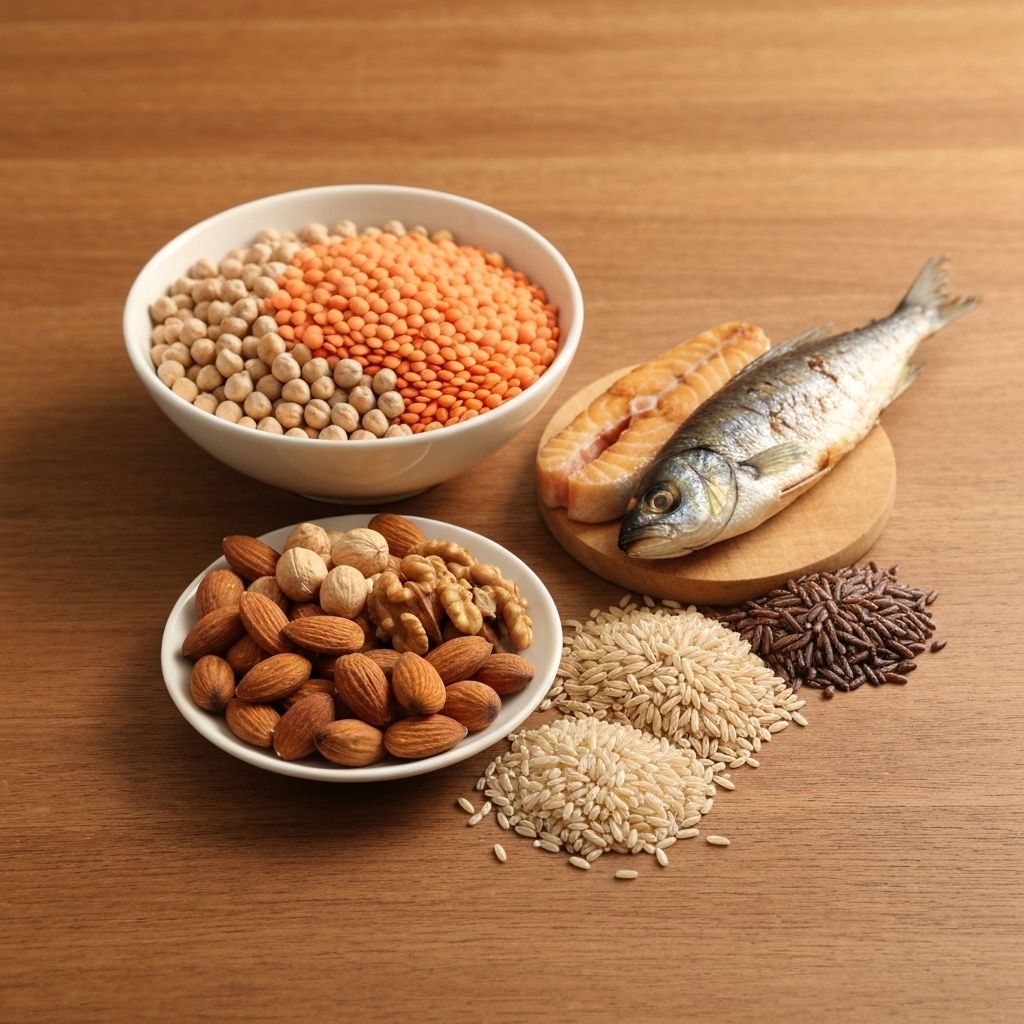
Fish such as salmon, mackerel, and sardines provide complete protein alongside omega-3 fatty acids, which support heart and brain health. Shellfish like oysters and clams also offer substantial protein with added micronutrients.
Eggs
Eggs are nutrient-dense, containing all nine essential amino acids plus choline, lutein, and other protective compounds. One large egg provides approximately 6 grams of protein with relatively modest calories.
Dairy Products
Milk, yogurt, and cheese provide complete protein along with calcium and other nutrients. Greek yogurt, for example, contains roughly twice the protein of regular yogurt due to its concentrated form.
Plant-Based Protein Sources
Legumes
Beans, lentils, and peas are plant-based protein powerhouses, containing 15-25 grams of protein per cooked cup. While individually incomplete (lacking methionine), combining legumes with grains throughout the day creates a complete amino acid profile.
Nuts and Seeds
Almonds, peanuts, pumpkin seeds, and hemp seeds provide protein alongside healthy fats and micronutrients. A handful of almonds (about 23 nuts) contains roughly 6 grams of protein.
Whole Grains
While often considered carbohydrate sources, grains like quinoa, oats, and brown rice do provide measurable protein—roughly 5-8 grams per cooked cup. Quinoa is particularly notable as a complete plant-based protein.
Tofu and Tempeh
These soy-based products provide complete protein with approximately 15-20 grams per serving. They're also rich in isoflavones and other bioactive compounds.
Protein's Role in Meals
Protein influences meal satisfaction significantly. It triggers stronger satiety signals than carbohydrates or fats alone, meaning meals with adequate protein tend to sustain fullness longer. This is particularly relevant as people evaluate hunger between meals.
Protein also has the highest thermic effect of food—meaning the body expends more energy digesting protein compared to other macronutrients. This is not a "metabolic boost," but rather a natural consequence of protein's digestive requirements.
Including protein sources across meals supports consistent energy and stable blood glucose, which influences mood, cognitive function, and appetite regulation throughout the day.
Considerations for Protein Intake
Recommended dietary allowance (RDA) for protein is 0.8 grams per kilogram of body weight for sedentary adults. Physically active individuals may benefit from higher intake—typically 1.2-2.0 grams per kilogram—to support muscle maintenance and recovery.
Older adults may require proportionally more protein to counteract age-related muscle loss. Individual needs vary based on activity, age, health status, and personal goals.
Diverse protein sources ensure varied micronutrient intake. No single protein source is required; combinations of animal and plant sources can meet all nutritional needs when consumed across varied meals.
Important Note
This content explains general nutritional concepts and does not constitute medical advice. Individual protein requirements vary significantly. For personalised dietary guidance, particularly if managing health conditions, consult with a healthcare provider or registered dietitian who can assess your individual circumstances.